A sunroom costs about $100 to $350 per square foot in 2026. A three-season room runs roughly $8,000 to $50,000, a fully conditioned four-season sunroom runs $20,000 to $80,000 or more, and prefab kits installed land between $10,000 and $50,000. In Pinellas County, expect the higher end of each range, because the glass has to meet Florida’s wind-borne debris rules and the room usually needs air conditioning to be usable in July.
Those are national averages adjusted for what we see locally. The rest of this guide explains where your project will fall and, just as important, whether a sunroom is the right thing to build here at all.
Sunroom cost by type
Three-season sunroom: $8,000 to $50,000
Single-pane or basic double-pane glass, no insulation in the walls or roof, no heating or cooling. Roughly $80 to $230 per square foot for a custom build. In most of the country this is the budget choice. In Florida, a three-season room is really a two-season room: pleasant from November to April and an oven the rest of the year.
Four-season sunroom: $20,000 to $80,000+
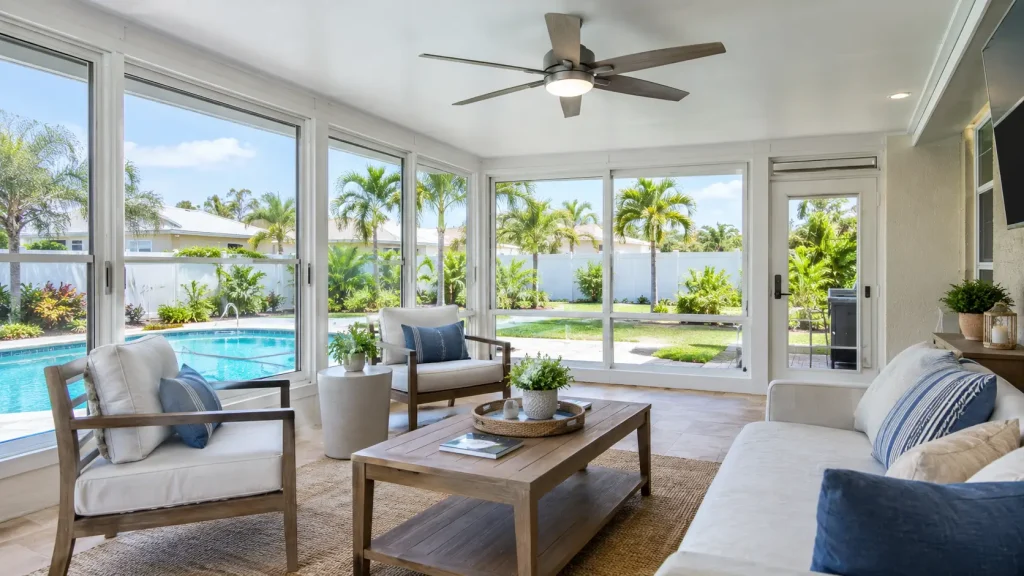
Insulated walls and roof, low-E insulated glass, and its own HVAC (usually a mini-split). Roughly $200 to $400 per square foot custom. This is the version that functions as real living space year-round and is what most Pinellas homeowners end up wanting once they think about August.
Prefab sunroom kit: $10,000 to $50,000 installed
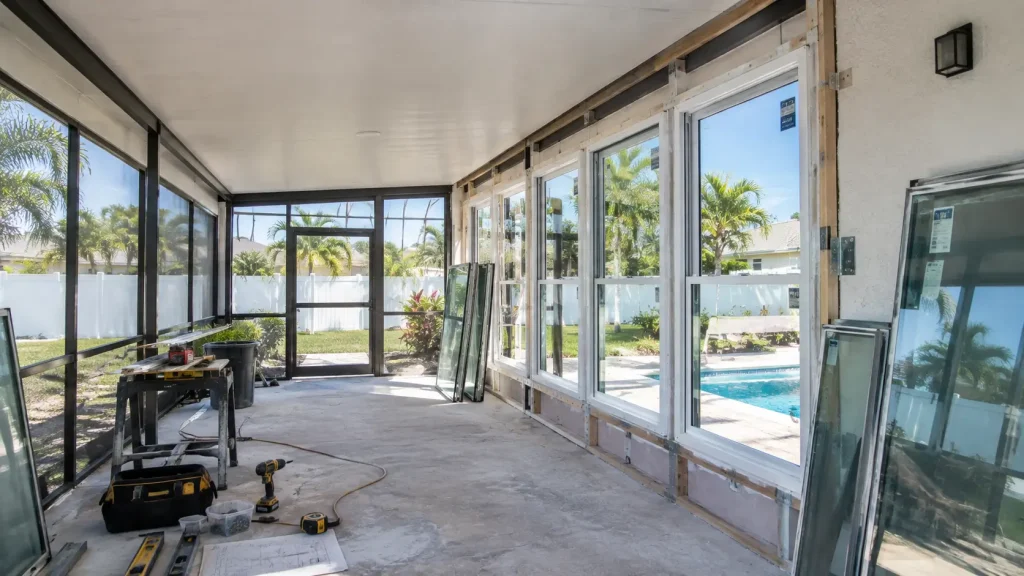
Aluminum-framed systems assembled on site. Material costs run $20 to $150 per square foot before installation. Kits are fast and the least expensive way to enclose space, but in Florida the product must carry a Florida Product Approval for wind loads, and the result rarely matches the architecture of the house.
Converting a screened porch or lanai: $4,000 to $20,000+
If you already have a roofed, screened lanai on a slab, enclosing it with windows is the cheapest path to a sunroom. The structure, roof, and floor already exist. Costs climb if the existing slab is below the finished floor of the house, the roof needs upgrading to carry glass, or you want it conditioned.
What makes sunrooms cost more in Pinellas County
- Wind-borne debris protection. Most of Pinellas is in the wind-borne debris region under the Florida Building Code, so all that glass has to be impact-rated or protected with approved shutters. Impact glass is the single biggest local cost driver.
- Engineering and permitting. A sunroom is an addition. It needs sealed drawings, a permit, and inspections, even if it is a kit.
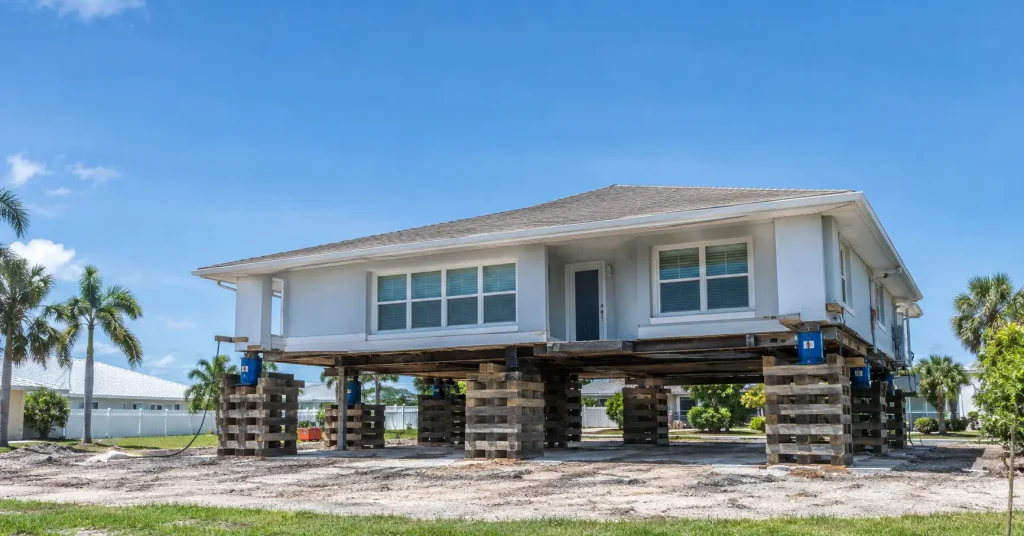
- Flood zone elevation. If the room is conditioned living space and your home sits in an AE or VE zone, the finished floor must be at or above the base flood elevation, and the cost counts toward the substantial improvement threshold (49 percent in Pinellas).
- Cooling load. Glass rooms gain heat fast. Low-E glass, insulated roof panels, and a properly sized mini-split are what separate a room you use from a room you avoid.
- Tying into the house. Matching roof pitch, stucco or siding, and trim so it looks original. Kits skip this; custom builds do not.
Sunroom vs. Florida room vs. lanai
Around here, these words get mixed up constantly. A lanai is a roofed, open or screened outdoor room, usually on a slab, with no glass. A Florida room is an enclosed room with lots of windows, often converted from a porch, sometimes conditioned and sometimes not. A sunroom is a Florida room with a deliberately glass-heavy design, often including a glass roof or large panels. For pricing, what matters is not the name but three things: is it conditioned, is the glass impact-rated, and is it on a proper foundation. We cover the definitions in our posts on what a Florida room is [LINK: What Is a Florida Room? — post pending] and what a lanai is [LINK: What Is a Lanai? — post pending].
Is a sunroom worth it in Florida?
A four-season sunroom that is conditioned, properly glazed, and built to look like part of the house adds real living space and shows well at resale. A three-season glass box that is unusable half the year does not. If your goal is to enjoy the outdoors, a large screened lanai with a solid roof and ceiling fans is often the better Florida answer and costs less. If your goal is more air-conditioned square footage with a view, build a four-season room and treat it as an addition.
How to budget for a sunroom
- Decide first whether it will be conditioned. Everything else follows from that.
- Get the flood zone and wind design requirements for your address before you look at products.
- Price impact glass early. It can be 30 to 50 percent of the material budget.
- Have one contractor design and build it so the roof tie-in, HVAC, and permit are all one responsibility.
- Hold back 10 percent for the slab, drainage, or electrical surprises that porches like to hide.
Ready to compare a sunroom against a lanai or a conventional addition? Our outdoor living and home addition teams in St. Petersburg and across Pinellas County design both, so you get a straight comparison rather than a sales pitch for one product.
Frequently Asked Questions
How much does a 12×12 sunroom cost?
A 144-square-foot sunroom runs roughly $15,000 to $50,000, depending on whether it is a kit, a three-season room, or a conditioned four-season room with impact glass. In Pinellas County, plan for the upper half of that range.
Do you need a permit for a sunroom in Florida?
Yes. A sunroom is a structural addition and requires sealed drawings, a building permit, and inspections in every Pinellas County jurisdiction, including prefab kits.
Does a sunroom need impact windows in Florida?
In the wind-borne debris region, which covers most of Pinellas County, glazing must be impact-rated or protected by approved shutters. Your contractor can confirm the requirement for your address.
Does a sunroom count as living space?
If it is heated and cooled, on a permanent foundation, and permitted, it is generally counted as conditioned living area. Unconditioned rooms are usually listed separately.
What is cheaper, a sunroom or a screened lanai?
A screened lanai. No glass, no HVAC, and lighter structure. It is also the more comfortable choice for actually being outdoors in Florida.
Ready to Talk to a Local Design-Build Team?
Van Selow Design Build is a licensed and insured design-build contractor (CBC1252610) based in Seminole, serving St. Petersburg, the Pinellas beaches, Belleair, Tierra Verde, and the rest of Pinellas County. We handle kitchens, bathrooms, home additions, ADUs, outdoor living spaces, and FEMA-compliant remodeling under one roof, from design through final inspection. If you want more space with a view and are trying to decide between a sunroom, a lanai, or a full addition, call 727-628-2219 or email info@vanselowdesign.com, or visit our contact page and we will set up a conversation about your home.