A wind mitigation inspection is a visual inspection that documents the features of your home that help it resist hurricane-force winds, such as the roof shape, how the roof deck is nailed, how the roof is tied to the walls, and whether windows and doors are impact-rated or shuttered. The inspector records the findings on Florida’s Uniform Mitigation Verification Inspection form, OIR-B1-1802, and your insurance company uses it to apply premium discounts. Florida law requires insurers to offer these discounts, the inspection costs about $75 to $150, and the report is good for up to five years.
For a Pinellas County homeowner paying Florida windstorm rates, it is one of the highest-return hours you can spend on your house. Here is how it works, what changed in 2026, and how a remodel or addition can earn you bigger credits.
What the inspection checks
The OIR-B1-1802 form covers seven categories:
- Building code. When the home was built or permitted. Homes permitted under the Florida Building Code (March 2002 onward) start with better credits. Older homes can still qualify on individual features.
- Roof covering. Type of roof material and whether it was installed to current code, with the permit date. A recent code-compliant reroof is a major credit.
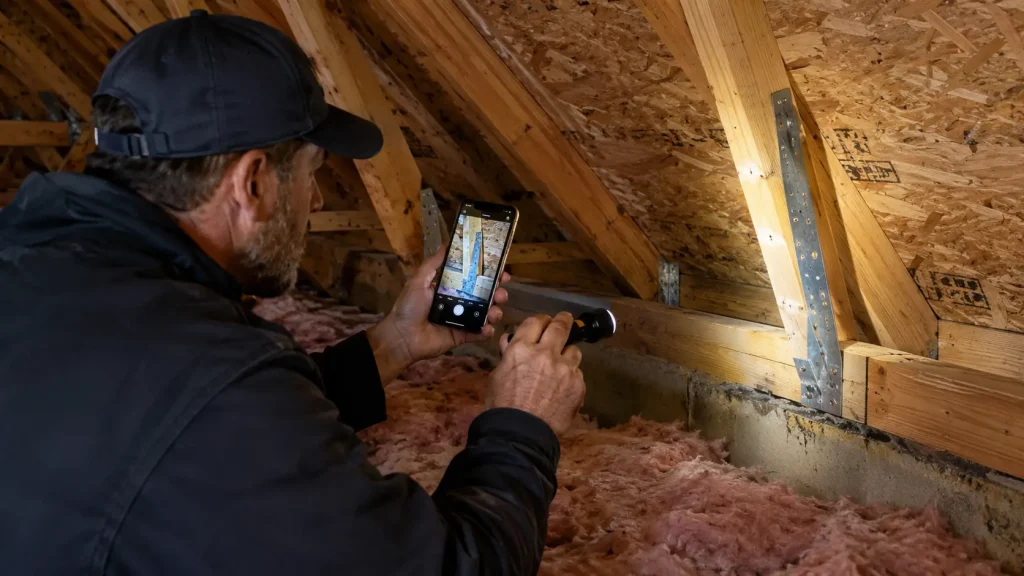
- Roof deck attachment. How the plywood or planks are fastened to the trusses: nail size and spacing. Verified from the attic.
- Roof-to-wall connection. Toe nails, clips, single wraps, or double wraps. Metal straps that wrap over the truss earn the best credit. Also verified from the attic.
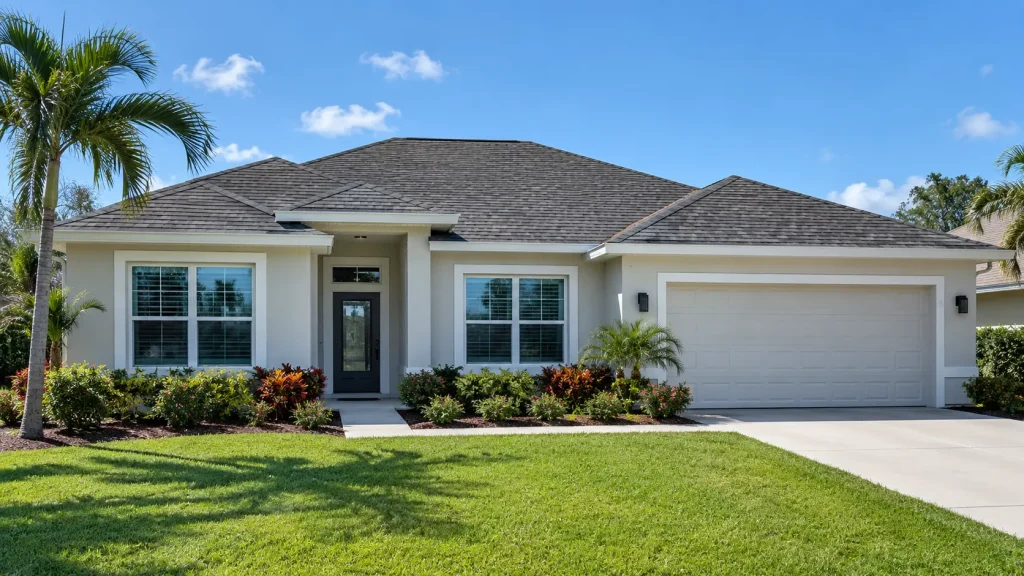
- Roof geometry. Hip roofs (sloping on all sides) perform better in wind than gable roofs and earn a significant discount if at least 90 percent of the perimeter is hip.
- Secondary water resistance. A self-adhering membrane or sealed roof deck under the shingles that keeps water out if the covering blows off.
- Opening protection. Impact-rated windows, doors, garage doors, and skylights, or approved shutters covering every opening. Partial coverage earns partial or no credit.
What changed in 2026
Florida’s Office of Insurance Regulation adopted an updated OIR-B1-1802 form, effective April 1, 2026, based on the 2024 Residential Wind-Loss Mitigation Study. The categories are the same, but the discount tables and qualifying criteria were revised to reflect how homes actually performed in recent hurricanes. Some features earn more than they used to; some are judged differently. If your last inspection is a few years old, it may be worth redoing on the new form, especially if you have added impact windows or reroofed since.
What it costs and what it saves
A standalone wind mitigation inspection typically runs $75 to $150. Bundled with a four-point inspection (which insurers often require on older homes) it runs about $125 to $225. Savings vary widely by carrier and home, but several hundred to well over a thousand dollars a year is common for homes with good features, and the discounts apply to the wind portion of the premium, which in coastal Pinellas is most of it. Under Florida Statute 627.0629, insurers must offer discounts for verified mitigation features.
Who can perform a wind mitigation inspection
Florida law limits it to licensed home inspectors with OIR-approved mitigation training, licensed general, building, or residential contractors, licensed architects and engineers, and certified building code inspectors. The inspector must sign the form. Ask any inspector for their license number and confirm it at MyFloridaLicense.com.
Wind mitigation vs. four-point inspection
They are often done together but answer different questions. A four-point inspection tells the insurer about the condition and age of the roof, electrical, plumbing, and HVAC, and is usually required to bind a policy on an older home. A wind mitigation inspection is about earning discounts. One can cost you coverage; the other can save you money.
How a remodel or addition can raise your credits
This is the part most homeowners miss. When you do significant work on a Pinellas home, you are already opening walls and roofs. That is the cheapest moment to add wind mitigation features:
- Reroof to current code and add a sealed roof deck or self-adhering underlayment. This alone often moves two categories.
- Upgrade roof-to-wall connections. During an addition or a second story, straps can be added or replaced while the framing is exposed. Retrofitting later means working through attic insulation.
- Install impact-rated windows and doors throughout, not just in the new space. Opening protection credit requires every opening to be protected, so a whole-house window package usually pays for part of itself in premiums.
- Choose a hip roof on an addition or new roof structure where the design allows.
- Replace the garage door with a wind-rated, impact-rated unit. It is the largest opening in most homes.
Florida also allows your existing home’s roof-to-wall connections to be evaluated for retrofit under certain roofing permits, so a design-build contractor who knows the mitigation form can plan a project that earns credits rather than leaving them on the table. After the work is done, schedule a new inspection so the new form goes to your carrier.
How to get the most out of your inspection
- Gather roof permit records and window or door product approvals before the inspector arrives.
- Make the attic accessible. Deck nailing and straps have to be seen and photographed.
- Make sure every opening has protection if you want the opening credit; one unprotected bathroom window can forfeit it.
- Send the signed form to your agent and ask for the revised premium in writing.
- Keep the report. It is valid for five years unless the structure changes.
Related reading: our home remodeling services, serving Seminole and the rest of Pinellas County. Our home addition cost guide [LINK: How Much Does a Home Addition Cost? — post pending] is in the works.
Frequently Asked Questions
How much is a wind mitigation inspection in Florida?
Usually $75 to $150 on its own, or $125 to $225 bundled with a four-point inspection.
How long is a wind mitigation inspection good for?
Up to five years, provided no material changes are made to the home and the form is found to be accurate.
Is a wind mitigation inspection required in Florida?
No. It is voluntary, but Florida law requires insurers to give discounts for verified mitigation features, so skipping it usually means overpaying.
How much can I save with a wind mitigation inspection?
It depends on your carrier and features, but savings of several hundred to more than a thousand dollars a year are common for homes with a hip roof, code reroof, good roof-to-wall straps, and full opening protection.
What is the OIR-B1-1802 form?
It is Florida’s Uniform Mitigation Verification Inspection form, the standard document inspectors complete and insurers accept for wind mitigation discounts. A revised version took effect April 1, 2026.
Ready to Talk to a Local Design-Build Team?
Van Selow Design Build is a licensed and insured design-build contractor (CBC1252610) based in Seminole, serving St. Petersburg, the Pinellas beaches, Belleair, Tierra Verde, and the rest of Pinellas County. We handle kitchens, bathrooms, home additions, ADUs, outdoor living spaces, and FEMA-compliant remodeling under one roof, from design through final inspection. If you are planning a roof, window, addition, or remodeling project and want it designed to earn wind mitigation credits, not just pass inspection, call 727-628-2219 or email info@vanselowdesign.com, or visit our contact page and we will set up a conversation about your home.